

Perishables Logistics in Canada — What You Need to Know
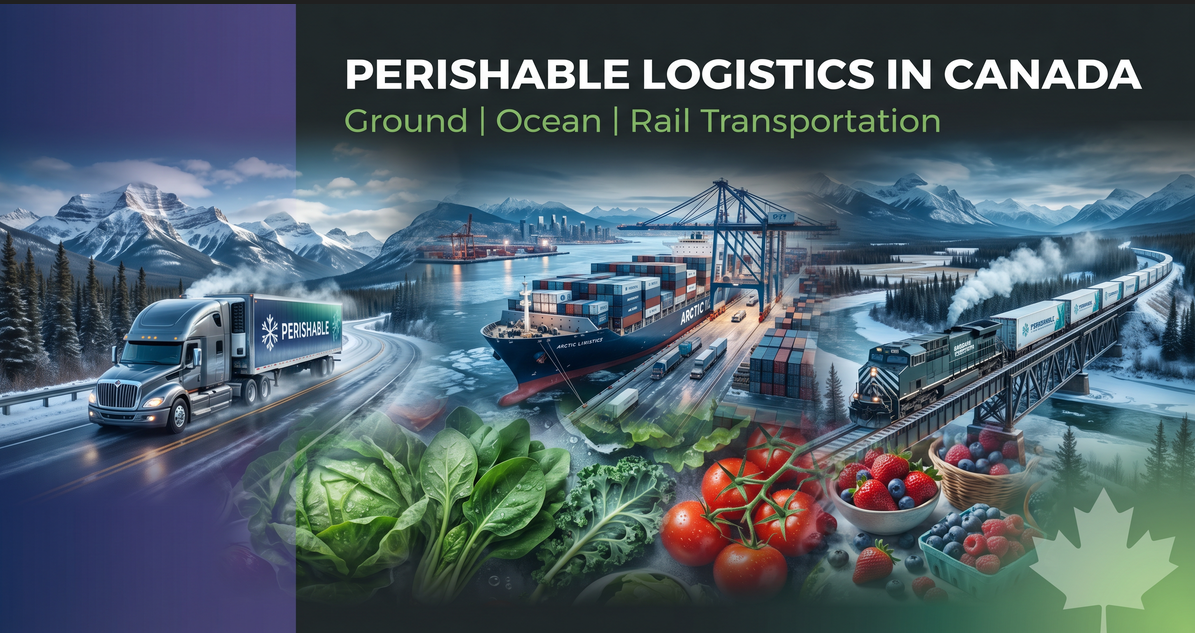
If you’re moving fresh produce, seafood, meat, or temperature-sensitive goods into or across Canada, there’s one reality you can’t escape: You’re not shipping cargo — you’re protecting shelf life.
If you’re moving fresh produce, seafood, meat, or temperature-sensitive goods into or across Canada, there’s one reality you can’t escape:
You’re not shipping cargo — you’re protecting shelf life.
At Shippers First Logistics, we’ve built our perishables logistics model around that exact principle.
What Is Perishables Logistics (and Why It’s Different)
Perishables logistics isn’t just about transportation — it’s about maintaining the integrity of the cold chain from origin to final delivery.
That means:
- Precise temperature control
- Continuous monitoring
- Speed and reliability
- Regulatory compliance
Because even a small temperature deviation can destroy product value — softening, spoilage, or bacterial growth can occur quickly if conditions aren’t maintained.
How We Handle Perishables Across Canada
Yes — we handle perishables. But more importantly, we handle them properly.
1. True Multimodal Cold Chain Capability
We move temperature-sensitive freight via:
- Refrigerated trucking (OTR)
- Rail (intermodal reefer solutions)
- Ocean containers (global imports/exports)
This flexibility allows us to balance speed, cost, and product sensitivity depending on the commodity.
2. Advanced Reefer Technology (It’s Not Just “Keep It Cold”)
Modern refrigerated containers aren’t designed to “cool” cargo — they are designed to maintain a precise pre-set temperature throughout the journey.
That’s a critical distinction.
We ensure:
- Proper airflow depending on cargo type (chilled vs frozen)
- Correct stowage (ventilated vs block stow)
- Product-specific temperature ranges (e.g., produce vs seafood)
Because bananas, seafood, and pharmaceuticals all require completely different environments.
3. Real-Time Visibility (Where We Differentiate)
Most providers will tell you where your truck is.
We tell you what’s happening to your product inside the container.
We deploy:
- GPS-enabled tracking devices
- Continuous temperature monitoring
- Cellular data transmission
- Alerts for deviations or risk conditions
This aligns directly with best practices in cold chain logistics, where monitoring temperature and humidity throughout the journey is essential to maintaining product integrity.
👉 This is where control shifts back to the shipper.
4. Cold Chain Is a System — Not a Single Step
Perishables logistics involves multiple interconnected stages:
- Preparation & packaging
- Cold storage
- Terminal handling
- Transport (truck, rail, ocean)
- Final delivery
Each step must be managed carefully — because a failure at any point breaks the chain.
As highlighted in the Easyfresh framework, cold chain logistics is a sequential system of monitoring, storage, handling, and transport working together.
5. CFIA Compliance (Non-Negotiable in Canada)
In Canada, perishables logistics must comply with Canadian Food Inspection Agency (CFIA) regulations.
This includes:
- Temperature control standards
- Food safety documentation
- Traceability requirements
- Sanitary transport practices
We build compliance into every shipment — not as an afterthought, but as part of the process.
Why Expertise Matters in Perishables Logistics
Perishables supply chains are fragile by nature.
Risks include:
- Transit delays
- Equipment failure
- Improper temperature settings
- Poor airflow or packaging
- Lack of visibility
Even minor issues can result in:
- Rejected shipments
- Financial losses
- Damaged customer relationships
That’s why experience in perishables isn’t optional — it’s critical.
Our Advantage: The Easyfresh Network
Shippers First Logistics is proud to be the Canadian representative of the Easyfresh Network.
This gives our clients:
- Global expertise in fresh cargo logistics
- Access to specialized perishables handling knowledge
- Proven processes for fruits, vegetables, seafood, meat, and more
- A neutral, independent global logistics network focused exclusively on perishables
Easyfresh is built on one core principle:
Deliver temperature-controlled logistics solutions from A to B — anywhere in the world.
What This Means for Canadian Importers & Exporters
If you’re shipping perishables into or out of Canada, you need more than a freight forwarder.
You need:
- Visibility — know what’s happening inside your shipment
- Control — proactive alerts and monitoring
- Compliance — meet CFIA requirements without risk
- Flexibility — truck, rail, ocean options
- Expertise — understanding of product-specific handling
Final Thought (And Why This Matters at CPMA)
As I prepare to attend the Canadian Produce Marketing Association (CPMA) conference, one theme continues to come up in conversations with shippers:
“We don’t just want to know where our shipment is… we want to know it’s still good.”
That’s the difference.
And that’s where we focus.
Looking Ahead
If you’re moving perishables and want to improve:
- Visibility
- Shelf life protection
- Cold chain reliability
Let’s have a conversation.